Sector expertise
R&D Tax Credits for Food & Beverage Companies
Food and beverage businesses are constantly developing new products, improving recipes, extending shelf life, reducing sugar, salt or allergens, improving production efficiency and responding to changing consumer, retailer and regulatory demands. Where your business is developing new formulations, improving manufacturing processes or overcoming uncertainty around taste, texture, stability, safety, packaging or scale-up, you may be carrying out qualifying R&D. InnoFund helps food and beverage companies identify eligible activity, prepare compliant R&D Tax Credit claims and protect future innovation funding opportunities.
Sector innovation
Innovation in Food & Beverage
Innovation in the food and beverage sector often happens through practical testing, reformulation, production trials, ingredient substitution, shelf-life work and process improvement. Qualifying R&D may arise where a business is not simply changing a product for commercial reasons, but is trying to resolve scientific or technological uncertainty around formulation, manufacturing, preservation, consistency, safety, sustainability or scale-up.
This includes work across:
- New product development
- Recipe reformulation
- Ingredient substitution
- Shelf-life extension
- Food safety innovation
- Sustainable packaging
- Process improvement
- Automation and robotics
- Low sugar and low salt products
- Vegan and allergen-free products
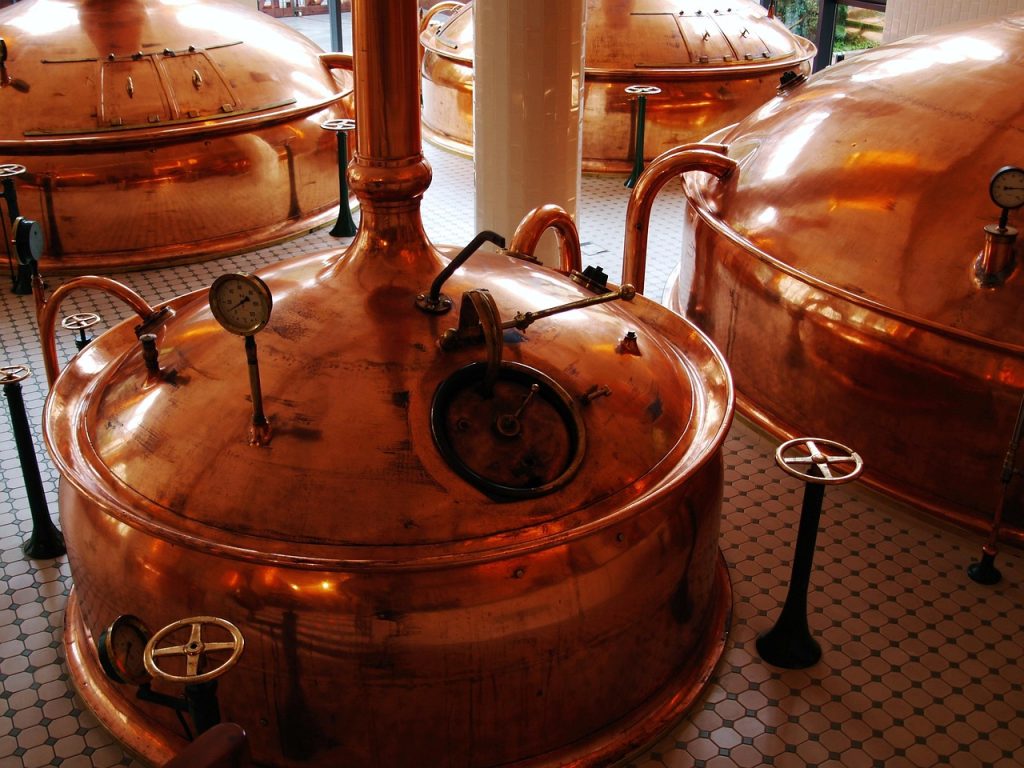
- Brewing and distilling innovation
- Bakery product development
Food and beverage R&D is often strongest where the evidence shows practical trials, failed formulations, process changes, stability testing or production constraints that had to be worked through systematically.
A note from Simba Mareverwa
Food & Beverage R&D Claims Need to Separate Product Development from Technical Uncertainty
Food and beverage projects can look like normal product development from the outside, but many contain genuine scientific or technological uncertainty. A business may be trying to remove an allergen, reduce sugar, improve shelf life, replace artificial ingredients, develop a low-alcohol drink, scale a recipe from kitchen to factory or maintain texture after changing a formulation.
HMRC will not accept a claim simply because a product is new, healthier, sustainable or commercially successful. The claim needs to explain what technical problem had to be solved, why existing methods were not enough, and what testing, reformulation or production trials were carried out.
Simba Mareverwa, InnoFund's Head of Compliance and Tax Disputes, helps ensure food and beverage R&D claims are reviewed with compliance at the centre. His focus is making sure claims are not built around broad claims of innovation or product improvement, but around clear technical evidence, eligible activity, competent professional input and defensible methodology.



Simba Mareverwa
Head of Tax Compliance & HMRC Disputes
- 20+ years in corporation tax compliance, including leadership of HMRC disputes.
- Extensive experience defending UK R&D Tax Credit claims under enquiry.
- Patent Box claim and enquiry experience dating from the scheme’s introduction.
Client experience
Food and Beverage Companies Recommend InnoFund
Practical support from a multidisciplinary team that understands both the technical work and the claim.


Clear boundaries
Not Every Food or Beverage Project Qualifies for R&D Tax Credits.
Not every product update, recipe change or production issue will qualify for R&D Tax Credits. The key question is whether the business faced scientific or technological uncertainty and carried out systematic work to resolve it.
Examples of work that may not qualify include:
- Simple menu changes
- Basic flavour changes
- Routine recipe tweaks
- Standard product launches
- Cosmetic packaging updates
- Routine quality control
- Standard compliance testing
- Normal production runs
- Off-the-shelf equipment installation
- General market research
- Commercial taste testing only
- Work after uncertainty is resolved
Food and beverage projects often contain a mixture of qualifying and non-qualifying activity. InnoFund helps separate commercial product development from genuine R&D so the claim is accurate, compliant and defensible.
Eligible expenditure
Eligible R&D Costs for Food & Beverage Businesses
Food and beverage businesses may be able to claim relief on qualifying costs linked to eligible R&D projects, including:
- Food technologist staff time
- Product developer staff time
- Production and technical staff time
- Technical director time
- Employer NIC and pension costs
- Subcontracted R&D, where eligible
- Externally provided workers
- Software used for testing or monitoring
- Cloud computing and data costs
- Trial ingredients and materials
- Prototype packaging costs
- Testing and analysis costs
The treatment of trial ingredients, consumables, prototype packaging, testing, subcontracted work, externally provided workers and client-funded development can be particularly important in food and beverage R&D claims.
InnoFund helps identify which costs are eligible and ensures the claim is built around the qualifying technical work, not just the wider commercial product launch.
Evidence & scrutiny
HMRC Risk Areas for Food & Beverage R&D Claims
HMRC is applying greater scrutiny to R&D Tax Credit claims, including claims from food, drink and manufacturing businesses. A strong claim must explain the technical uncertainty clearly and show why the work went beyond routine product development, taste preference or commercial reformulation.
Common risk areas include:
- Claiming routine product development as R&D
- Weak technical uncertainty explanation
- No clear baseline of existing knowledge
- Overclaiming commercial recipe changes
- Claiming taste preference as technical uncertainty
- Poor records of failed trials
- Incorrect subcontractor treatment
- White-label or client-funded work treated incorrectly
- No competent professional input
- Failing to separate qualifying and non-qualifying work
- Generic sustainability claims
- Unclear project boundaries
InnoFund helps food and beverage companies prepare claims that are clear, compliant and evidence-led. We focus on the technical work behind the product or process, the uncertainty faced, the trials carried out and the costs directly connected to qualifying activity.
Your next step
Don't guess. Know for sure.
Got a project you want to discuss? InnoFund helps separate routine delivery from genuine R&D so that claims are accurate, compliant and properly evidenced. Speak to our innovation funding experts today.
- 30 minutes
- Expert guidance
- Commitment free