

IP consulting & InnoGuard®
IP Consulting.
Value beyond the idea.
Identify what makes your innovation valuable—and decide how best to protect and commercialise it. InnoGuard connects technical, IP, tax and commercial thinking, giving you a clear route from the work you are doing to a considered intellectual property strategy.
- schedule30-minute first conversation
- groupsTechnical and commercial review
- verified_userCoordinated patent attorney input
One connected view of innovation
The invention.
The protection.
The commercial case.
A review establishes the options; it does not guarantee patentability, a grant or a commercial return. The £300m+ figure is InnoFund’s published historic tax-benefit total across services, not a result for this service alone or a promise of outcome. Trustpilot covers the wider business and may change.
For founders, owners and technical teams
Build the business case.
Before you build the portfolio.
You may have created a valuable product, process or technical improvement without thinking of it as intellectual property. Or you may already hold rights but be unsure whether they support the business as well as they could.
We start with your objectives: protecting a market position, licensing technology, preparing for investment or understanding future tax opportunities. A patent can be part of the answer—but it should earn its place in the strategy.
- Start at a high level
- Explain the business and your objective first. We agree confidentiality arrangements before reviewing sensitive technical detail.
- Understand the options
- Consider patents alongside trade secrets, designs, trade marks and the rights already present in your business.
- See the commercial logic
- We consider likely value, scope, cost and ongoing commitments—not simply whether an application can be filed.
- Know the scope and cost
- Defined work and fixed-fee options are agreed upfront, with attorney and official costs made clear.
Why InnoFund
Technical insight.
IP direction.
Commercial purpose.
InnoGuard brings the disciplines together around your innovation. Our team and patent attorney network help you move from a promising idea to an informed decision.
Technical understanding
Understand what is different.
Our specialists examine the product or process and identify the features that deserve closer IP assessment.
Protection strategy
Protect what matters.
Consider the appropriate right, claim scope, territories, ownership and the implications of disclosure.
Tax perspective
See the potential beyond protection.
We assess how qualifying development and future IP profits might connect with R&D tax relief and Patent Box.
Commercial value
Choose a proportionate investment.
Compare the potential return with application costs, maintenance, market priorities and the alternatives.
A coordinated service, with the right professional roles. InnoFund leads the technical, commercial and tax review; specialist patent legal advice, drafting and prosecution are coordinated with patent attorneys where required.
Reasons to start an IP conversation
The opportunity may
already be in the work.
You do not need an existing patent portfolio. We help identify the questions to ask before a launch, alongside development, or when reviewing an established business.
A product or process improvement
Explore whether the technical features merit patent assessment or another form of protection.
A launch, exhibition or pitch
Consider confidentiality and filing strategy before making technical information public.
An R&D project with commercial potential
Connect the development work to ownership, protection and the way the business expects to earn income.
An existing IP portfolio
Review whether the rights, territories and ongoing costs still serve your commercial priorities.
A licensing or partnership opportunity
Understand what you own, what can be shared and how the commercial arrangements should be considered.
Investment or future growth
Identify IP assets, documentation gaps and valuation questions before discussions with potential partners or funders.
Identify. Protect. Commercialise.
A strategy that extends
beyond an application.
Our original IP consulting offer covers the creation, identification, protection and exploitation of intellectual property. We shape the work around the commercial decision you need to make.
Patentability, freedom to operate and the value of an asset are different questions. We make that distinction clear and bring in the appropriate expertise for each.
- search
IP audits and opportunity reviews
Identify the rights and technical assets present in the business, alongside gaps in ownership or documentation.
- travel_explore
Patent and competitor landscapes
Review relevant patent activity, competitors and technology trends to inform the next investigation.
- verified_user
Protection and portfolio strategy
Consider the suitable rights, scope, territories and maintenance priorities with specialist legal input.
- fact_check
Freedom-to-operate coordination
Arrange targeted searches and specialist assessment of potential third-party rights; owning a patent is not permission to use every aspect of a product.
- handshake
Licensing and commercial partnerships
Explore licensing routes, potential partners and IP valuation questions, with legal and financial input as needed.
- account_balance
Tax and funding connections
Assess R&D tax relief, future Patent Box eligibility and IP-backed funding options. Tax relief and finance remain subject to their own conditions.
How we work
From promising work
to a considered IP plan.
We agree a focused route through the decisions, so technical, legal and commercial work stays connected. A review can lead to a filing strategy, a different protection approach or a decision not to proceed.
- 01
Understand the objective
Discuss your business, the innovation and what you want protection or commercialisation to achieve.
- 02
Review the technical opportunity
Assess the work, ownership and available records, with confidentiality arrangements agreed before sensitive disclosure.
- 03
Test the options
Consider relevant rights, existing patents, commercial potential and whether specialist searches or legal analysis are needed.
- 04
Agree the strategy and cost
Set out the proposed scope, roles, next steps and expected professional and official costs.
- 05
Coordinate delivery
Work with your team and patent attorneys on the agreed plan, connecting protection with commercial and tax considerations.
Start with the decision you need to make
A focused review.
Or a wider IP strategy.
Our support is designed to join up expertise around a useful outcome, whether that is the first IP assessment or a broader commercial plan.
InnoGuard opportunity review
Identify potential patentable features
A technical and commercial review to decide whether a product or process merits further patent assessment.
A protection-led brief
Build a broader IP strategy
Consider the business’s rights, markets, confidentiality needs and portfolio priorities with specialist attorney input.
An established portfolio
Review the value of what you hold
Assess whether existing rights support licensing, partnerships, commercial growth and potential tax opportunities.
An ongoing relationship
Connect IP to development
Work alongside your R&D and finance teams, including businesses already using InnoFund and SecuRD®, to identify opportunities as work progresses.


Protection with the wider return in view
A patent should have
a commercial purpose.
A carefully scoped patent may form part of a wider IP strategy, while separate know-how remains confidential. But a patent application must sufficiently disclose the invention it claims, and applications are normally published. A narrow claim is not a route around those requirements.
We assess protection alongside the potential for Patent Box relief on qualifying IP profits and R&D tax relief on qualifying development. A patent grant does not by itself establish either tax claim.
- shieldA defined protection objective
- visibilityDisclosure and confidentiality considered
- account_balanceTax opportunities tested on their own conditions
The people behind the advice
Technical understanding. Commercial perspective.
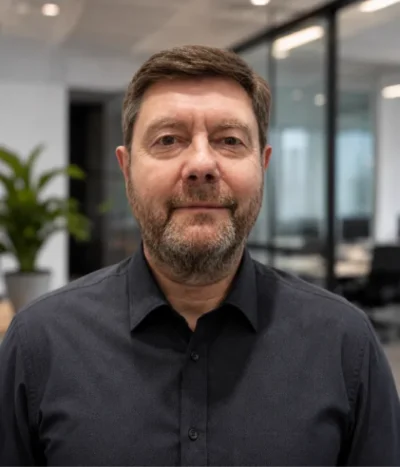
Richard and our wider team connect IP consulting with engineering, science, tax and legal considerations. We coordinate with our network of patent attorneys for specialist patent advice and applications, rather than leaving you to manage disconnected workstreams.

Richard Skelton
Head of Land Remediation Relief and Partnerships Director
Capital Allowances, IP Consulting, Land Remediation Tax Relief, and R&D Tax Relief


Frances Pollard
Head of Legal
Legal and Compliance Support


Selected client work
Different innovations.
The same connected thinking.
Three anonymised examples from the original InnoGuard service show how a technical review can open an IP conversation.
Precision engineering
Assess the opportunity before the exhibition.
An engineering company had developed a hydraulic system but had not assessed its patentability. An upcoming international exhibition made the disclosure question important.
InnoFund’s IP audit identified features for patent assessment and supported a focused protection strategy. The original case reports patents and a subsequent Patent Box claim; those outcomes are not a promise that every technical improvement will qualify.
Medical devices
Connect technical work to an IP portfolio.
A start-up developing a wound-healing patch had not explored whether its work could be patented. InnoFund supported its patent rights and IP protection planning.
The original case reports a patent granted within 18 months and a resulting Patent Box opportunity. That is a historical project timeline, not a standard grant period.
Food manufacturing
Document the innovation already on the line.
A food manufacturer had introduced innovative elements into an automated packaging line but lacked adequate IP documentation.
InnoFund’s on-site assessment helped the business document the work and pursue patent protection. The original case also reports Patent Box benefits, assessed separately from the filing of applications.
Historical examples reported by InnoFund. Outcomes and timings are specific to each engagement, not guarantees. Patent grant and Patent Box eligibility require separate conditions; application alone does not establish relief.
IP consulting & InnoGuard®, explained
Questions before you start.
A first discussion can help you decide which IP questions are worth exploring—and what to keep confidential.
Discuss your IP strategy arrow_outwardDo we need a patent before talking to you? add
No. InnoGuard can start with a product, process or technical improvement that has not yet been assessed for IP protection. We help identify the questions and whether further specialist analysis is worthwhile.
Should we share the invention in the consultation form? add
No. Start with a high-level description of the business and your objective. We agree confidentiality arrangements before discussing sensitive technical information. Public disclosure can affect patentability, so ask for advice before a launch, exhibition or publication.
Does InnoGuard guarantee that a patent will be granted? add
No. Grant depends on the invention, the application and examination by the relevant patent office. We coordinate technical assessment and professional input, but do not promise a grant, a fixed approval time or a guaranteed financial return.
Can a narrow patent keep the invention secret? add
A narrow patent has a limited claim scope; it still needs to disclose the claimed invention sufficiently, and applications are normally published. Separate know-how may remain confidential, but a patent strategy must consider disclosure and trade secrecy properly.
Do you work with patent attorneys? add
Yes. We work with a network of patent attorneys and coordinate their specialist advice with our technical, tax and commercial review. The scope, professional responsibilities and fee arrangements are made clear at the outset.
Is patentability the same as freedom to operate? add
No. A potentially patentable invention may still interact with rights held by others. Freedom to operate needs its own targeted assessment, usually including specialist searches and patent legal advice for the relevant product, activity and territories.
Can a patent help with Patent Box relief? add
Potentially, but a grant alone is not enough. Patent Box also depends on the company, qualifying rights, development, relevant income and the calculation of qualifying IP profits. We assess the commercial and tax position together without treating relief as automatic.
How are the costs agreed? add
We scope the work and discuss defined or fixed-fee options before you proceed. Any attorney, official filing, search, examination or ongoing maintenance costs relevant to the plan should be made clear. The right approach depends on your objectives and the work needed.
Your next step
Start with the idea.
Leave with a clearer direction.
Tell us at a high level what your business is developing and what you want to achieve. We will discuss the useful next step and agree how to handle sensitive information before reviewing confidential technical details. There is no need to upload your invention to book a consultation.
- schedule30 minutesA focused first conversation
- verifiedExpert guidanceTechnical, tax and commercial context
- handshakeCommitment freeA clear next step, without obligation